What it is
What it does
John's tip
Disease begins with lymphatic dysfunction. Get the free health guide
Your body's sewage treatment system, one area at a time. Tap a glowing point to see what it does, how lymph flows through it and John's tips for keeping it moving.
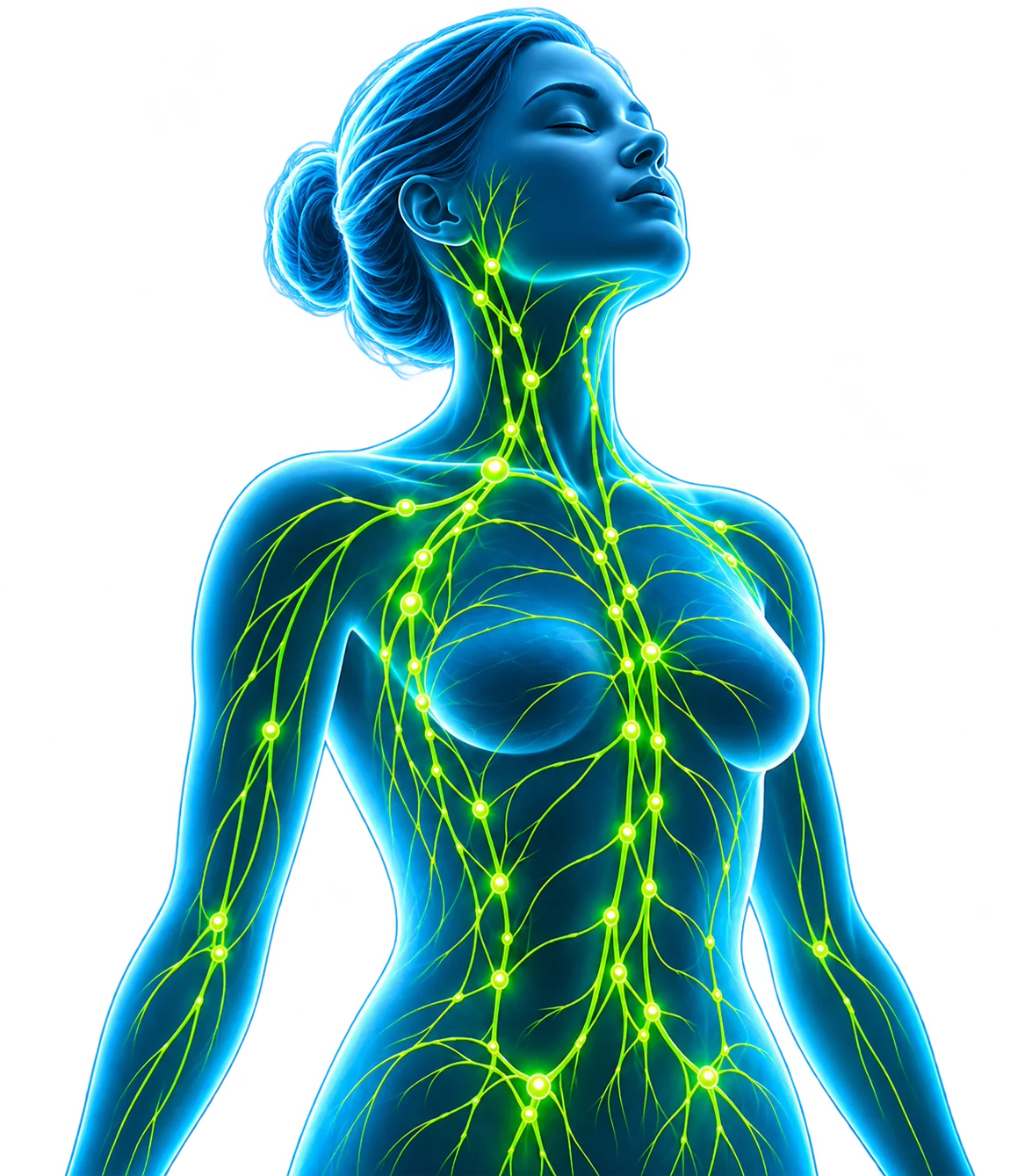
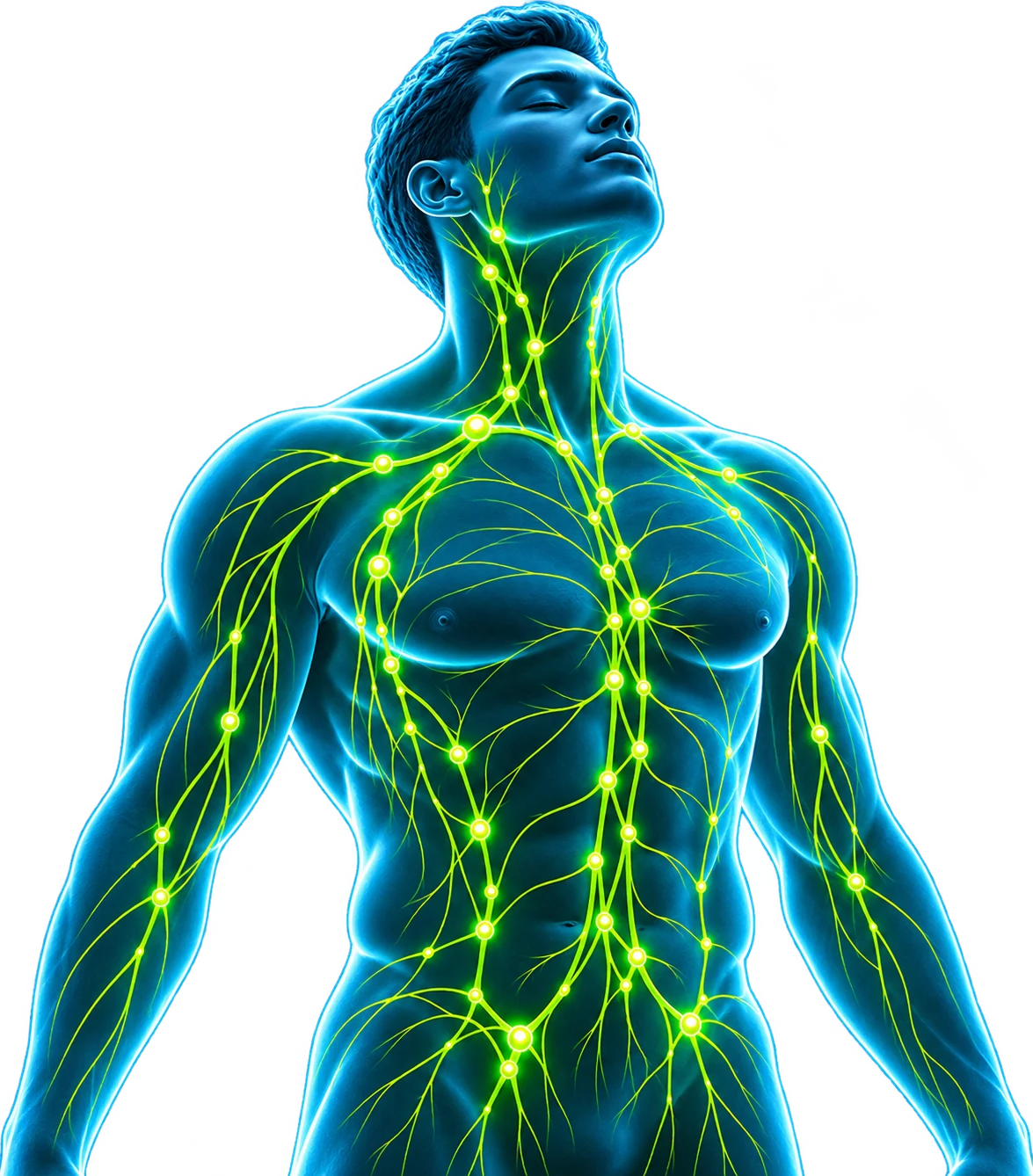
Illustration for education only, not a diagnostic tool. The moving dots show the general direction lymph travels, not measured flow. The legs continue below the picture.
Lymph moves one way: from the tissues, through the nodes, and back into the blood near the collarbones.
Every day, fluid seeps out of tiny blood vessels to feed your cells.
Lymph capillaries pick up that fluid along with cellular waste, fats and debris.
Hundreds of lymph nodes filter the lymph and help the immune system respond.
Breathing and muscle movement push lymph upward, mostly through the thoracic duct.
Behind the collarbones, lymph empties back into the bloodstream. Then it starts again.
Blood has the heart. Lymph relies on breathing, muscle movement, gentle pressure and the vessels' own contractions.
Valves inside the lymph vessels keep lymph moving toward the heart and stop it flowing backward.
Lymphatic vessels in the brain were found in 2015, changing how scientists think about brain health.
John's Reboot Health course walks you through every area on this map, step by step, with the Ossipinsky Method of Self-Lymphatic Drainage.
Send John a question, or start free with LymphMan's Lymphatic System Health Guide.